


Yes, an outdoor kitchen can be worth it in the UK if it is planned around real use, shelter, lighting and the wider garden layout. After the UK reached its hottest June day on record in 2026, outdoor living feels less like a luxury and more like a practical part of how we use our homes in summer.
For many clients, the value is not just in cooking outside. It is in making the garden more practical during warmer weather, creating a better space for entertaining and reducing the need to move constantly between the house and garden.
In hotter weather, cooking indoors can also make an open-plan kitchen or glazed extension feel even warmer. Being able to cook outside, enjoy the cooler evening air and keep the house more comfortable can make a real difference.
The main question is not simply whether an outdoor kitchen is worth it. It is whether a full kitchen, a simpler barbecue area or a covered cooking space is right for how you actually use your garden.

When is an outdoor kitchen worth the investment?
An outdoor kitchen is most likely to be worth it when it supports how the garden is already used.
It can work well if:
- you regularly cook outside during spring and summer
- you entertain family or friends in the garden
- the kitchen can sit close to dining and seating
- the layout allows people to gather without standing in the cooking area
- there is space for shelter, shade and lighting
- the materials are practical for rain, heat, food and regular cleaning
- the garden is being redesigned, so the kitchen can be planned from the beginning
For family gardens, this matters. Children may be moving between the lawn, pool, terrace or dining table. Older relatives may need somewhere shaded and comfortable to sit for longer. Guests need somewhere to gather without blocking the person cooking.
The size of the garden also changes the design. In a compact or town garden, the outdoor kitchen may sit close to the house, which can make food preparation, serving and clearing away easier. In a larger garden, the kitchen may be further from the indoor kitchen, so routes, storage, guest flow and access for larger gatherings need more thought.
When is an outdoor kitchen not worth it?
It may not be worth the investment if the garden does not have a natural place for cooking, dining and seating to connect. If the kitchen is too far from the house, too exposed to wind and rain, or separated from the main entertaining area, it is less likely to be used regularly.
It may also be the wrong priority if the terrace, planting, privacy, access or lighting still need attention. In those cases, the budget may be better spent on making the wider garden more usable first.
An outdoor kitchen may not be worth it if:
- you only barbecue a few times a year
- the cooking area would be too far from the house
- smoke would drift towards the house or seating area
- power, Wi-Fi, water or drainage have not been planned
- a simpler barbecue area would suit the garden better
Do you need a full outdoor kitchen or a barbecue area?
A recent client was interested in using kamado-style ceramic charcoal barbecue cookers as the main cooking feature, rather than building a full outdoor kitchen. After looking at how the garden would be used, we decided a smaller cooking area under a pergola would suit the space better.
The idea was to create a dedicated area with the Big Green Egg, a prep table, lighting, power and Wi-Fi. It still gave them a proper outdoor cooking space, but without making the design more complicated than it needed to be.
A full outdoor kitchen may make sense if you want:
- regular outdoor cooking
- food preparation space
- integrated storage
- a sink or fridge
- a built-in grill or pizza oven
- a more permanent entertaining setup
A simpler barbecue area may be enough if you want:
- occasional summer cooking
- a dedicated space for a barbecue
- a smaller setup under a pergola or canopy
- lighting and power without a full kitchen structure
- more flexibility in the wider garden layout
For clients still comparing cooking options, our blog on the best outdoor kitchen appliances for garden design looks at grills, sinks, fridges and storage in more detail.

Where is the best place to put an outdoor kitchen?
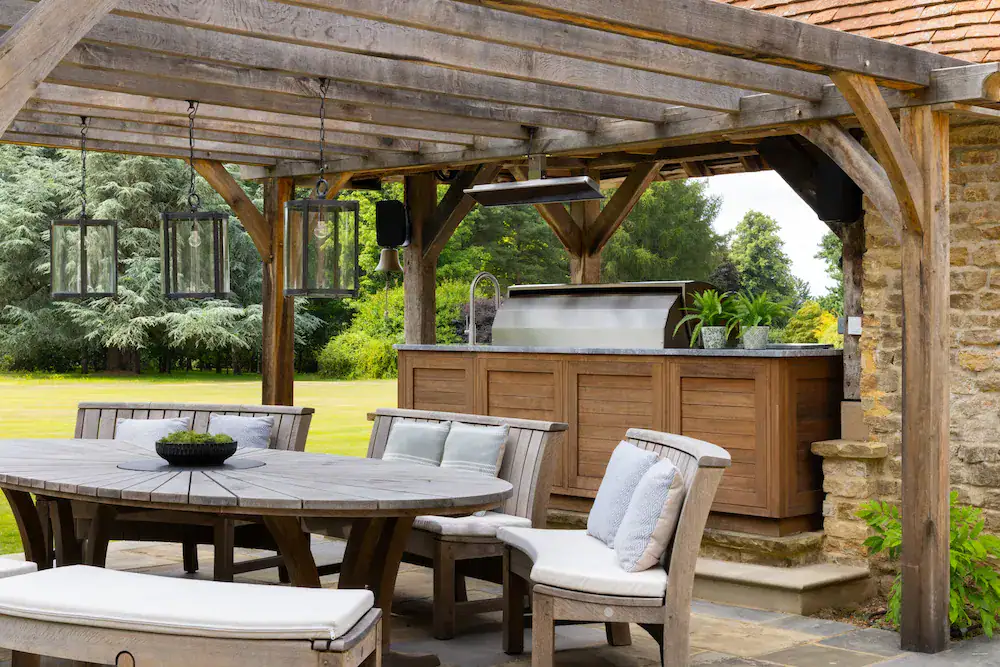
An outdoor kitchen should be close enough to the house to feel convenient, but far enough away to avoid smoke, heat and cooking smells becoming awkward.
It should also connect naturally with seating and dining. The person cooking should not feel separate from everyone else, but guests should not have to stand in the cooking zone.
The best position will depend on:
- access from the indoor kitchen
- wind direction and smoke movement
- where the sun falls during the day
- shade from pergolas, canopies, trees or planting
- the location of dining and seating areas
- routes between the house, terrace, lawn, pool or other garden features
- views from inside the house out into the garden
- level changes, drainage and service routes
Orientation matters too. A kitchen that catches evening sun may be used differently from one that sits in full afternoon heat or a shaded corner. Wind direction, views from the house and the relationship between indoor and outdoor spaces all affect whether the kitchen feels like part of the garden or a separate add-on.
In our Ashtead project, we positioned the outdoor kitchen and Grillo BBQ area beneath a bespoke covered canopy, close to the main seating area. This meant the cooking space became part of the entertaining area, with the pool, fire pit, planting, seating and lighting planned around it.
That is what makes an outdoor kitchen feel useful. It is not just about where the barbecue fits. It is about how the whole garden works.

How does the UK weather affect an outdoor kitchen?
Rain, wind, damp conditions and darker evenings all affect how often the space will be used. A kitchen that works well in a warmer climate may not work as well in a UK garden unless shelter, lighting and materials are planned properly.
For the UK climate, it is worth considering:
- a pergola, canopy or covered cooking area
- wind direction, especially around smoke and heat
- non-slip paving for wet weather
- materials that can cope with rain and temperature changes
- task lighting for cooking
- softer lighting for dining and seating
- covers or storage for appliances and furniture
- planting that can soften exposed terraces and provide shade
Shelter is especially important. A covered or partly covered cooking area can make the kitchen more usable in light rain and more comfortable in strong sun.
A considered garden lighting scheme can also make the space more usable in the evening without over-lighting the rest of the garden.
What materials work best for an outdoor kitchen?
The best materials for an outdoor kitchen are durable, slip-resistant, easy to clean and suitable for year-round outdoor use.
For flooring, the surface needs enough grip for wet weather and should cope with food, grease, furniture and regular foot traffic. Porcelain can work well in contemporary gardens because it is durable and consistent in finish. Natural stone can feel more settled around period or country properties, as long as the finish is chosen carefully. Brick or clay pavers can also work well where a warmer, more traditional feel is needed.
It is also worth thinking about heat underfoot. In family gardens, children may walk across from the lawn or pool without shoes on. Very dark paving can become uncomfortable in strong sun, so lighter-toned materials may be more suitable in exposed areas.
The kitchen structure itself should also be suitable for outdoor use. Powder-coated metal, stainless steel, masonry, stone and weather-resistant cabinetry are all worth considering. Timber can work, but only when the maintenance is understood from the start.

Good material choices should consider:
- grip in wet weather
- heat around cooking areas
- staining from food and drinks
- comfort underfoot
- cleaning and maintenance
- how the materials sit beside the house
- how the terrace connects to planting and seating
The right paving can help define the cooking, dining and seating areas without needing walls or screens. Planting can then soften the edges of the terrace and make the outdoor kitchen feel more settled within the garden.
What should be planned before the build?
An outdoor kitchen should be planned early, especially if it needs power, lighting, Wi-Fi, gas, drainage or water. These details are harder and more expensive to add once the terrace and surrounding hard landscaping have already been built. The position of appliances, worktops, lighting, seating and routes back to the house should all be considered before construction begins.
The route of the services matters as much as the appliances themselves. In a smaller garden, connecting power or water may be relatively straightforward if the kitchen is close to the house. In a larger garden, longer service runs can affect cost, route planning and how the space is built. Sloping gardens can also need more thought, especially where drainage or wastewater has to move back towards a suitable connection point.
Before starting, think about:
- where the cooking area will sit
- whether you need power, Wi-Fi, gas, water or drainage
- where lighting will be needed
- how food will be prepared and served
- where guests will sit or gather
- how smoke and heat will move
- whether levels or slopes affect drainage
- how the space will be cleaned
- how the kitchen will be protected in winter
- whether the materials suit the house and wider garden
For larger projects, this is where garden design can make a real difference. The outdoor kitchen can be planned alongside the terrace, planting, lighting, levels and views, rather than being added once the main layout has already been decided.
Final verdict: is an outdoor kitchen worth it in the UK?
An outdoor kitchen is worth it in the UK when it is designed around real use, not just appearance. For some gardens, that may mean a full outdoor kitchen with storage, refrigeration, a sink, lighting and shelter. For others, a well-positioned barbecue area with good prep space, power and seating may be the better choice.
The most successful outdoor kitchens are planned as part of the wider garden. They consider how people cook, host, move, sit and use the space at different times of day. They also account for the practical details that are not always obvious at first, including service routes, drainage, orientation, wind and lighting.
If you are planning a garden redesign and want to understand whether an outdoor kitchen is right for your space, contact us to discuss your project.