


A swimming pool can become one of the most defining features in an expertly landscaped garden, but only when it feels properly connected to the wider landscape. The most successful pool gardens are not simply built around the water. They are designed as complete outdoor environments, where the pool, planting, paving, seating, lighting and architecture all work together.
This is especially important in larger residential gardens, where a pool needs to feel intentional rather than placed into an unused area of lawn. Its position, scale and surrounding materials should respond to the house, the views, the sun, the levels and the way the garden will be used throughout the year.
So, what should you consider when planning swimming pool landscaping for an expertly designed garden?
How should you position a swimming pool in the garden?
The position of the pool should be one of the earliest decisions in the design process. It affects how the pool looks, how it feels to use and how naturally it connects with the rest of the garden.
Sunlight is usually a key consideration. A pool that receives good levels of sun during the day will feel more inviting, particularly in the UK climate, where warmth and shelter can make a significant difference to how often the space is used. South-facing or west-facing positions can work well, as these areas typically receive the most sunlight throughout the afternoon and evening in UK gardens, helping the water and surrounding space feel warmer at the times clients are most likely to use the pool.
The pool should also relate to views from the house, existing trees, privacy, wind exposure and the natural movement through the garden. For example, the view from the home can add real value to the overall design. Being able to see the water, its reflections and the surrounding planting from key rooms helps the pool feel like part of the garden’s identity, not a separate feature.
A pool close to the house can work well as part of an entertaining terrace, while one set further into the garden can feel more private and retreat-like. In either case, the focal point matters. Positioning the pool, planting or surrounding features carefully within the foreground can help the garden stand out and create a stronger sense of composition.
Expert tip: Before deciding where the pool should sit, consider the view both towards the pool and from the home. A well-positioned pool should create a sense of arrival, reflect the wider garden beautifully and offer a calm, considered view when being used.
What materials work best around a swimming pool?
Materials around a pool need to be beautiful, durable and practical. Natural stone is often a strong choice for expert swimming pool landscaping because it brings texture, permanence and character. Limestone, sandstone and sawn stone can all work well, depending on the tone of the house and the surrounding garden. Porcelain can also be effective in more contemporary gardens, particularly where precision and low maintenance are important.
However, poolside materials need to be chosen with safety as well as appearance in mind. A surface should not become slippery when wet, especially in family gardens, but it also needs to feel comfortable under bare feet. For instance, smooth polished paving can become slippery after swimmers leave the pool, whereas overly riven or coarse stone may feel uncomfortable for children and adults walking barefoot.
Expert tip: Look at poolside materials wet as well as dry. Water changes the colour, texture and reflectivity of paving, so samples should be considered in the conditions they will actually experience.

How can planting soften a swimming pool?
Planting is what allows a home swimming pool to feel different from a public or commercial pool. Instead of a hard, exposed space, the pool can sit within a softer garden setting, with planting used to frame views, create privacy and bring seasonal movement into the area.
Around a swimming pool, plants need to be chosen carefully. Avoid overly messy trees or plants that drop excessive leaves, berries or petals directly into the water. This does not just improve the appearance of the pool area. It can also reduce upkeep, as fewer leaves and branches falling into the water means fewer call-outs for contractors to clean, clear or maintain the pool and surrounding space.
Careful planting can also improve privacy. When trees and shrubs are positioned thoughtfully, they can screen views into the garden without creating ongoing maintenance issues. This helps clients enjoy the pool area with fewer people needing regular access to the garden for upkeep.
It is also worth thinking about where pollinator-friendly planting sits. Plants such as lavender, Nepeta and Salvia can be beautiful and valuable for wildlife, but they may be better positioned near seating edges or planted borders rather than immediately beside the pool, where bees and wasps could become a nuisance.
Mediterranean-style planting often works well because many of these plants are suited to sunny, well-drained conditions. Ornamental grasses, clipped evergreens, scented climbers and multi-stem trees positioned away from the water can all help the pool feel more established within the garden.
Expert tip: Use planting to control the mood of the pool area. Clipped evergreens create formality, grasses create movement, and scented planting near seating areas can make the space feel more atmospheric in the evening.

How should seating and entertaining areas work around the pool?
A pool garden should include more than space to swim. Seating, dining and entertaining areas help define how the pool will be used throughout the day.
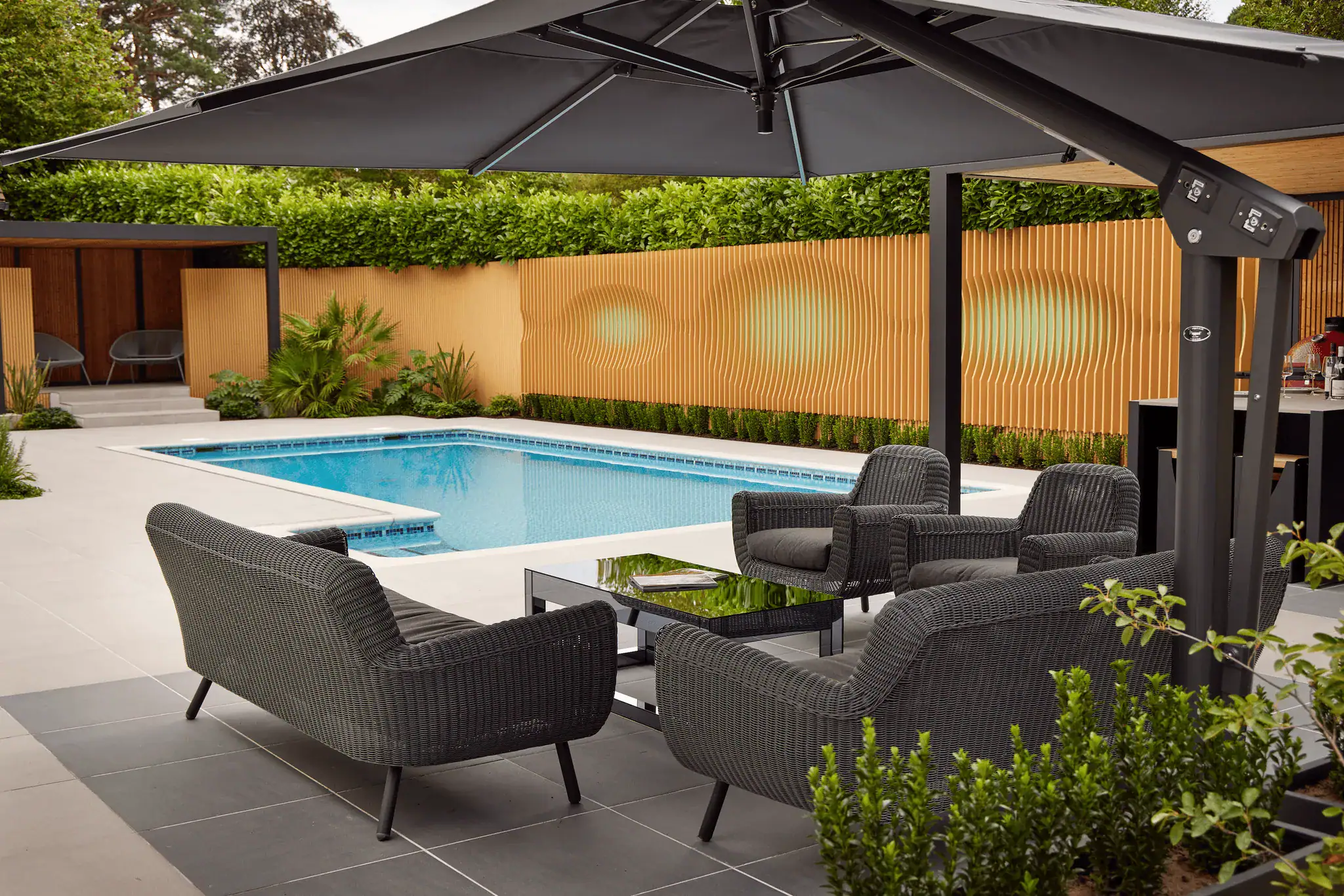
Sun loungers need open, sunny positions with enough space to move comfortably around them, while a shaded seating area can provide relief during the warmest part of the day. Dining areas often work best slightly away from the pool edge, particularly when connected to an outdoor kitchen, terrace or pool house.
For many of our clients, this reflects a wider shift towards gardens that support everyday outdoor living. Rather than treating the pool as a standalone feature, the surrounding space is planned around how clients want to cook, relax, host and spend time outside throughout the year.
A swimming pool should not force the rest of the garden to work around it. Instead, it should support the way the whole outdoor space is used, whether that means quiet morning swims, family afternoons, evening entertaining or larger gatherings.
How can levels improve pool landscaping?
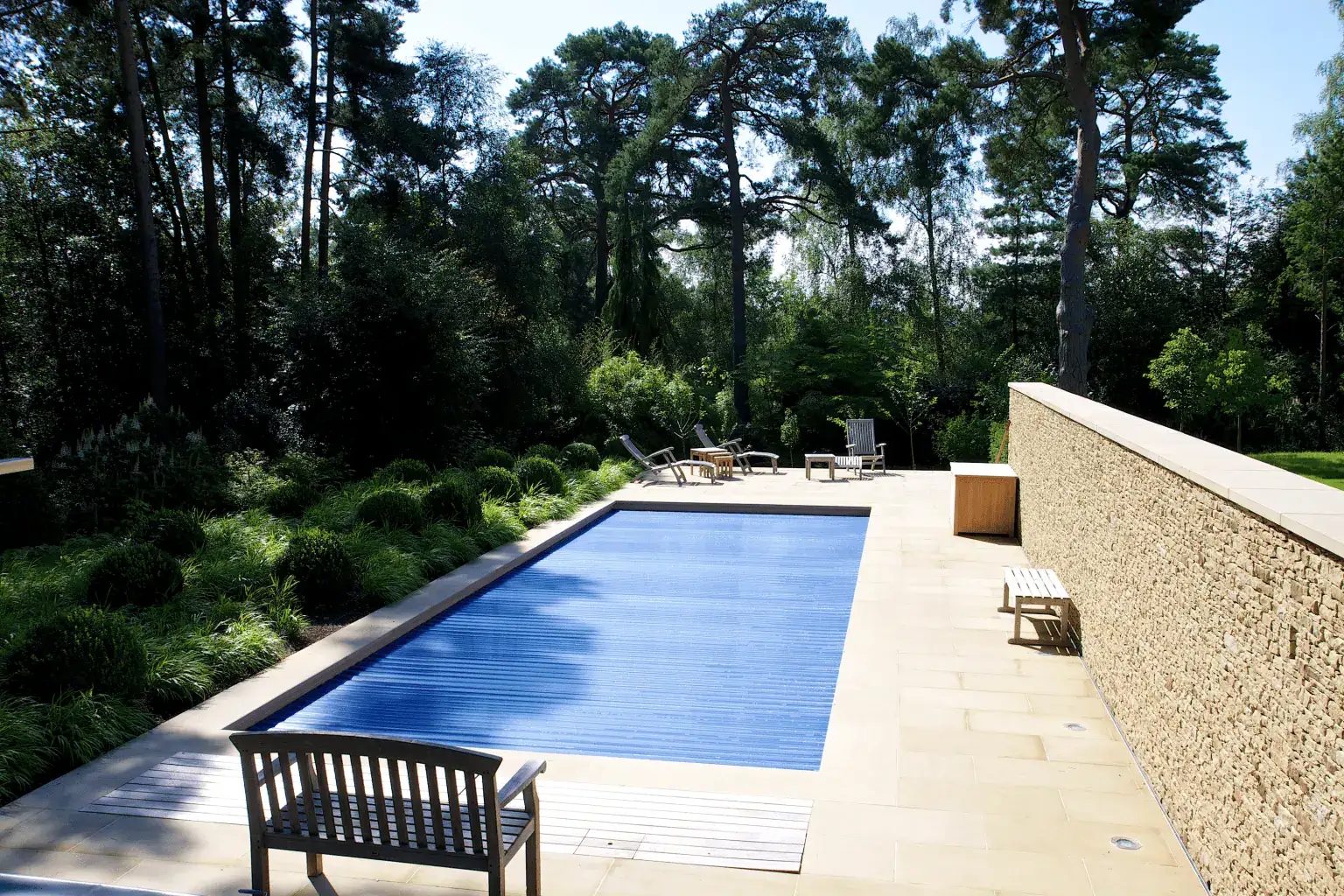
Levels can help a swimming pool feel more integrated into the garden, especially in sloping or multi-level spaces. A raised terrace can create views towards the pool, while a sunken pool area can feel more sheltered and private.
Steps, retaining walls and planted banks can also help the pool sit naturally within the wider landscape. They can create a sense of progression through the garden, rather than allowing the pool to feel isolated from the rest of the design.
Pool covers should also be considered at this stage. Among our clients, discreet automated pool covers are often popular because they support safety, heat retention and day-to-day practicality without disrupting the finished look of the garden. Many modern systems are also strong enough to walk across when closed, helping the pool area feel safer and more usable within the wider garden design. Recessed or concealed cover systems can be especially effective when planned early, as they allow the cover, drainage and service access to sit neatly within the wider landscaping.
Expert tip: Plan pool covers, drainage and service access early so they do not disrupt the finished design.
How can lighting improve the pool area?
Lighting changes how a pool garden feels after dark. Subtle lighting can reveal the shape of the water, highlight planting and guide movement without making the garden feel over-lit.
Low-level path lighting, recessed step lights and gentle uplighting can all help create atmosphere. For many clients, the aim is not to make the whole garden bright, but to create depth, reflection and safe movement around the pool.
This approach connects naturally with our advice on garden lighting design ideas at night, where lighting is explored as part of the wider garden composition.
How can privacy be designed around a swimming pool?
Trees, hedging, pleached forms, pergolas and level changes can all create enclosure without making the pool area feel closed in.
Privacy should be planned early, especially in relation to neighbouring properties, upper windows and public views. This is particularly important around swimming pools, where clients often want the area to feel relaxed, comfortable and secluded.
Expert tip: Layered planting often feels softer and more refined than solid screening, especially when the pool needs privacy without feeling enclosed.
What should a pool house include?
Pool houses are becoming increasingly popular because they turn a swimming pool into a more complete outdoor living space. In the UK, where weather, comfort and practicality all matter, a pool house can provide shelter, storage, changing facilities and a natural place to gather before or after swimming.
This also reflects how expertly landscaped gardens are now being used. Clients are not only looking for a pool, but for a setting that supports wellness, entertaining and relaxed everyday use. A well-designed pool house may include changing space, showers, toilets, towel and equipment storage, covered seating, heating, an outdoor kitchen or bar area, and glazed doors that connect back to the garden.
The design should feel connected to the architecture of the house and the materials used in the garden, so it supports the pool area without overpowering it.
Expert tip: Think beyond changing. The most useful pool houses support the whole outdoor living experience, from practical storage to creating a comfortable place to sit when the pool is not in use.
Planning a swimming pool garden with PC Landscapes
Swimming pool landscaping requires design, construction knowledge and careful planning. Positioning, materials, planting, privacy, lighting, drainage, pool covers and access all need to be considered early in the process.
Our approach to pool gardens is shaped by the wider setting. Each site requires a different response, whether that means working with levels, preserving mature planting, creating entertaining space or ensuring the pool feels connected to the home.
If you are planning a swimming pool as part of a wider expert garden landscaping project, we can help shape the design and landscaping so the finished space feels cohesive from the beginning.
Get in touch with our team to discuss your project and arrange a consultation.