


Can you landscape a waterlogged garden?
If your lawn squelches underfoot each winter or the same corner fills with water whenever it rains, you may wonder whether the garden you have in mind is achievable. You might be planning a terrace that opens directly from a townhouse or rethinking how the gardens and grounds of a country house fit together.
A waterlogged garden can be professionally landscaped, with drainage improvements forming part of the overall design. In either setting, understanding where rainwater goes helps us decide what the landscape can accommodate and design a garden that works well throughout the year.
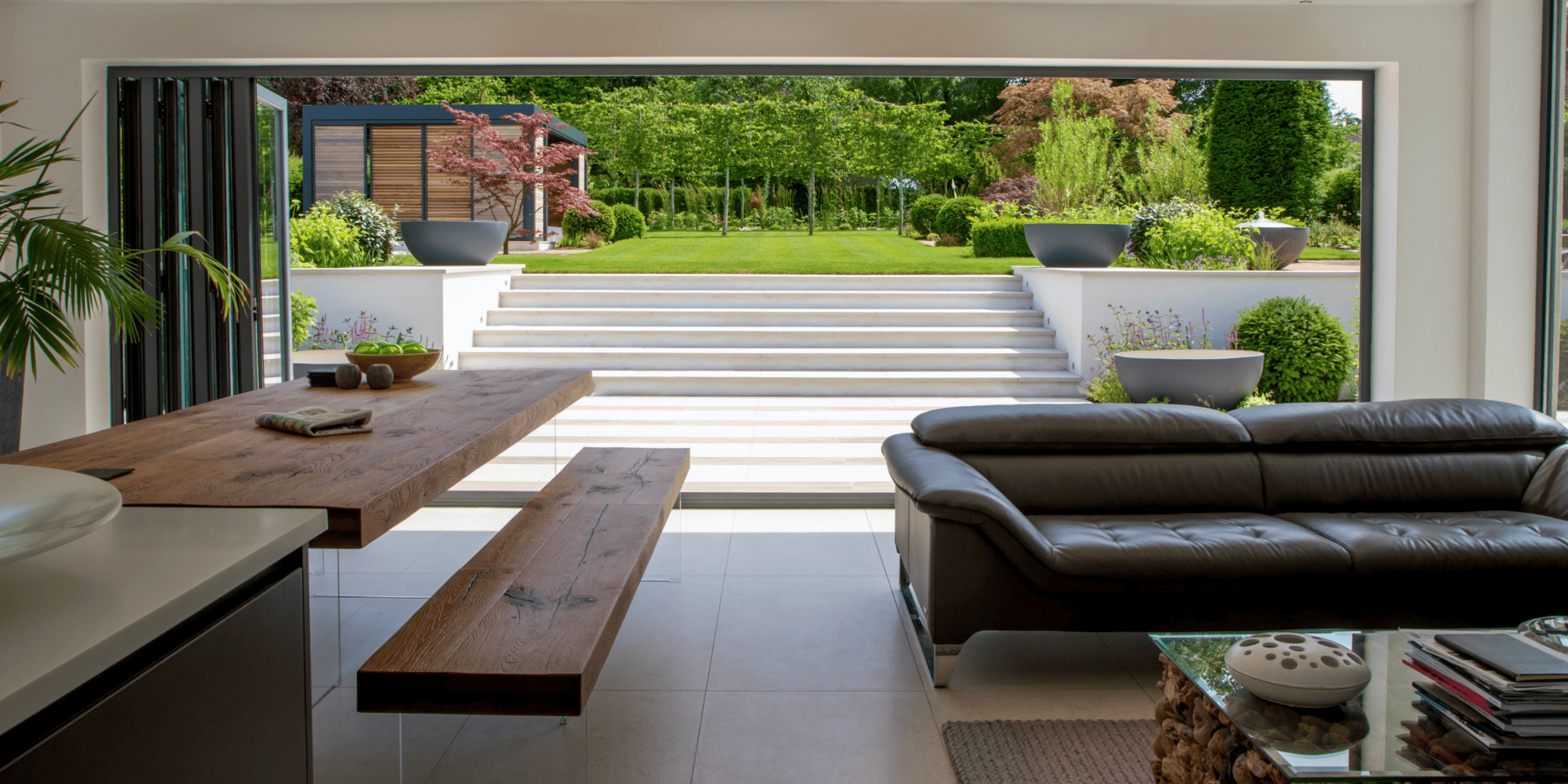
Why does your garden become waterlogged?
Waterlogging happens when rain cannot soak through the soil or flow away across the surface quickly enough. A persistent wet patch can point to a problem in that particular spot, while a saturated lawn may be linked to the soil beneath it or the way the garden slopes.
Heavy clay soil holds on to water and drains slowly, particularly after prolonged rainfall. On a property that has recently been extended or refurbished, construction traffic can also compact the soil beneath the surface. A newly laid lawn may look fine through summer, with the problem becoming apparent only after prolonged winter rain.
The shape of your garden plays a part too. A shallow hollow may collect rainwater, while a slope can direct it towards the same patch of lawn. Runoff from roofs, driveways or neighbouring higher ground can add to the problem. Previous building or landscaping work may also have changed where water travels. A new terrace, raised border or altered ground level can interrupt its natural route, leaving it with nowhere suitable to go.
A brief soaking is usually manageable for most plants. When the soil stays saturated, however, roots struggle to get the oxygen they need, and lawns and planting can begin to suffer.
Good drainage starts with understanding the site
Before deciding on a solution, we need to understand where the water comes from, how it moves and where it can safely go. We start by looking at the garden in relation to the house and the land around it. Water collecting at the foot of a terrace, for example, may have come from a driveway or slope well beyond it.
A levels survey shows where water naturally collects and whether the ground directs it towards the house. On a larger estate, that can mean tracing runoff beyond the immediate garden to a driveway further uphill or an adjoining slope. In a townhouse garden, a small difference between the terrace level and a door threshold can shape the drainage design.
We also assess the soil and the existing drainage. Where we’re considering a soakaway, infiltration testing helps establish how quickly the ground can absorb water at the proposed location. Seasonal groundwater levels also inform whether that approach is suitable.
It helps to hear what you’ve noticed. Does the lawn stay wet throughout winter? Did the problem begin after building work? Do puddles appear beside the terrace first? These observations help build a clearer picture of how your garden behaves.
Planning drainage around the garden you want
The site assessment gives us a starting point for discussing how you’d like to use the space. You might want a dining terrace close to the kitchen, steps leading down to a secluded seating area or a lawn that opens out onto the wider grounds.
Each choice affects the layout. New paving changes how much rain reaches the soil, while terraces and retaining structures alter the movement of surface water. Drainage needs to be considered alongside these decisions from the beginning of the garden design process.
Depending on the site, the design may include:
- Improving compacted soil and preparing planting areas.
- Adjusting levels to guide surface water towards suitable collection areas.
- Using permeable surfaces where ground conditions allow.
- Installing drainage with a suitable outlet for the collected water.
- Incorporating planted areas that temporarily hold runoff.
Where the grounds allow, a shallow planted channel, known as a swale, can carry runoff across the landscape. A rain garden can hold water temporarily while it drains. Close to the house, the priority may be to set the terrace falls and door thresholds together so water is directed away from the building. We also consider where excess water would go in a heavy storm, when the ground is saturated or the drainage system is at capacity.
How does the design and build process work?
Once the design is agreed, we set out the proposed work, materials and costs for your approval. Our landscape construction team then coordinates the build, with specialist contractors involved where needed.

Ground preparation may include excavation, levelling or creating terraces on a sloping site. We coordinate drainage with underground services and electrical supplies before paths, steps and other finished surfaces are completed. Before the paving goes down, we check that the ground levels, drainage outlets and service routes work together and that inspection points will still be accessible once the garden is complete.
We oversee the work through to completion, keeping you informed as the garden takes shape. Where the landscaping forms part of a wider refurbishment or new build, we can also coordinate with the other professionals involved.
Planting that suits your garden
A successful planting scheme starts with the growing conditions. Some parts of your garden may remain naturally moist, while others become much drier in summer. Our planting design takes those differences into account alongside colour, seasonal interest, privacy and the character of your home.
We can use the garden’s moisture patterns to give different areas their own character. A low-lying border might suit plants that tolerate periods of wet soil, while planting around a raised terrace may need to cope with much drier conditions. The distinction matters particularly for trees and structural planting, which will shape the garden for years.
Irrigation can also be planned for plants that need support during establishment and dry weather. Even a garden that struggles with winter waterlogging may need carefully managed watering in summer. Soil preparation, water management and plant selection all play a part in creating a garden that will establish well and mature as intended.

Taking the next step
If your garden remains saturated for long periods, water collects near the house or you’re planning substantial changes to the layout, it makes sense to seek professional advice early. Considering drainage from the outset gives you more scope to plan how the terraces, planting and wider grounds will work together.
We design and build gardens across Surrey, Hampshire, Berkshire and the South East. If you have plans for your garden and would like to understand how the ground conditions might shape them, get in touch with PC Landscapes to discuss what’s possible.